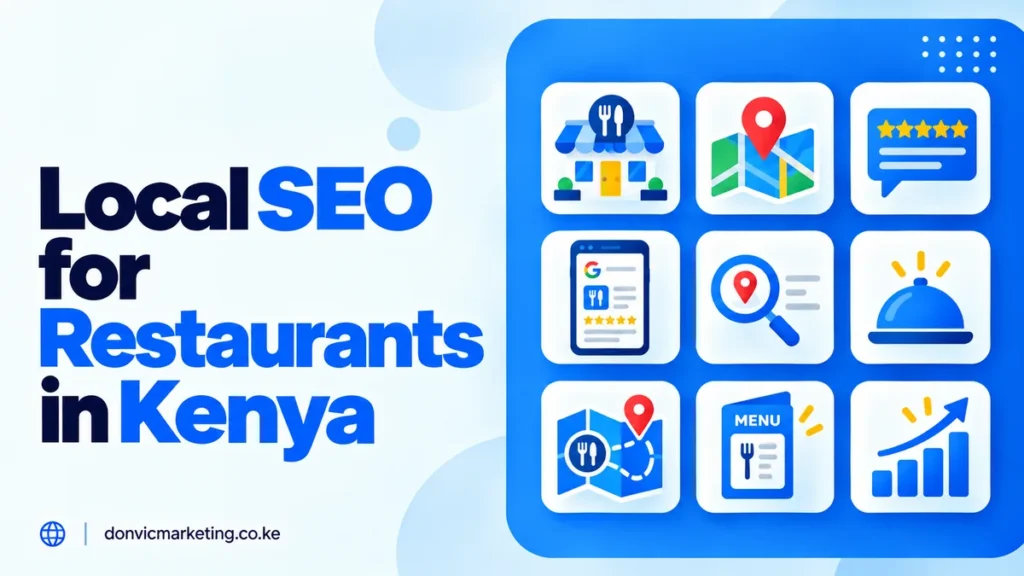
It is seven in the evening in Nyali. Someone types “pizza near me”. They will not read your About page. They will glance at the photos, the rating, the distance and whether you are open, then tap call or directions. The whole decision takes about ten seconds, and it happens on Google Maps.
That is why restaurant SEO is mostly profile work. The website supports it; it rarely replaces it. The priorities, in order: the right category, hours that are always correct, current photos, a readable menu with prices, a steady flow of reviews, and one-tap calling and directions.
How People Search for Restaurants
| Search | Example | Where it is decided |
| Right now | “restaurants near me”, “food delivery Nyali” | Google Maps |
| By cuisine | “Indian restaurant Mombasa”, “nyama choma Karen” | Maps, then websites |
| By occasion | “romantic dinner Nairobi”, “birthday venue Diani” | Websites, guides, Maps |
| By name | “[restaurant] menu”, “[restaurant] opening hours” | Profile and website |
| Practical | “restaurant with parking Westlands”, “open now” | Maps, using hours and attributes |
To find which of these people search in your area, use local keyword research.
The Google Business Profile, in Priority Order
- Primary category. Be specific: “Pizza restaurant”, not just “Restaurant”, if that is what you are.
- Opening hours, including public holidays, Ramadan and the festive season. Change them before the day, not after.
- Photos of food, the dining area, the entrance and staff at work. Add new ones every month; they sway choice more than any text.
- Menu, current, with real prices.
- Attributes: parking, outdoor seating, delivery, takeaway, family friendly, card and M-Pesa payment.
- Ordering and reservation links, only if the systems work every time.
- Reviews, with a reply to each one.
Our Google Business Profile optimisation guide covers every field, and how to rank higher on Google Maps explains what moves you into the top three.
Your Menu Is Your Best Page
The menu is the most searched thing a restaurant has, and the most often mishandled.
| Do | Why |
| Publish it as text on a web page | Google and screen readers can read text; images and PDFs are harder |
| Include prices | The first question every customer has |
| Name dishes clearly | People search for dishes by name |
| Keep it current | Old prices destroy trust at the till |
| Add a line about each dish | Useful to guests, and gives Google more to match |
A PDF or Instagram post is fine as an extra. It should not be the only version.
Photos That Bring People In
Shoot in good light, show the portions you actually serve, include the entrance so people recognise it, show the seating, and update when the menu changes. Guests’ own photos add authenticity, so welcome them.
Reviews
Restaurants collect reviews faster than most businesses, good and bad. Ask when a guest pays a compliment, never offer a discount for a review, reply to every one, and name the specific issue when replying to complaints. Watch for recurring themes such as slow service, noise, portion size or parking, and fix them. Our guide to getting more Google reviews has a routine your team can follow.
Website Pages Worth Having
| Page | Purpose |
| Home | Location, cuisine, hours, one-tap call and directions |
| Menu | The full text menu with prices |
| Location | Landmarks, parking, matatu and boda access |
| Bookings | Table reservations that actually work |
| Events and private hire | Higher-value bookings |
| Offers | Lunch specials, happy hour, seasonal menus |
Keep it fast on mobile data; a menu that takes ten seconds to load loses the customer standing outside your competitor. See Core Web Vitals for Kenyan websites. If you run more than one branch, give each a proper page; service area pages explains how.
Add Restaurant structured data with your name, address, phone, hours, cuisine and price range, matching what is visible on the page (Google’s local business guidance).
Delivery Apps and Your Own Channels
Delivery apps bring volume at a commission. Your own channels bring margin. Keep your name, address and hours identical on every platform (local citations and directories explains why), show direct ordering or calling clearly, and keep regulars close through a WhatsApp list, with their consent.
Search brings people who are already hungry. To fill quiet midweek evenings, you also need to create demand: social media marketing keeps your food in front of locals, and Facebook and Instagram ads can promote a lunch offer to people within a few kilometres.
What to Measure
| Metric | Where | Why |
| Calls from the profile | Profile performance | Bookings and orders |
| Direction requests | Profile performance | Walk-ins |
| Menu page views | Google Analytics | Interest before visiting |
| Reservations | Booking system | Direct revenue |
| Searches by day and time | Profile performance | When demand really peaks |
Where Restaurants Lose the Click
- A menu that exists only as a PDF or an Instagram image
- Wrong hours on public holidays
- Photos that are years old, or none of the actual premises
- No replies to reviews
- Different hours on the profile, website and delivery apps
- Competing only for weekend dinners and ignoring lunch
Frequently Asked Questions
How do restaurants rank higher on Google Maps in Kenya?
Choose a specific primary category, keep hours accurate, add current photos, publish a readable menu with prices, collect reviews steadily and reply to them, and keep your details identical everywhere.
Should my restaurant menu be a PDF?
Not only a PDF. Publish the menu as text on a web page so Google and customers can read it on any phone. Keep the PDF as an extra.
Do restaurants need a website if they have a Google profile?
Yes, but a simple one: menu, location, hours, bookings and events. The profile wins the moment of choice; the website answers the questions that come before and after.
How many reviews does a restaurant need?
There is no set number. Recent, regular reviews with replies matter more than a large old total.
How do I get customers on quiet weekdays?
Promote lunch and midweek offers on your profile and website, and use social media and local ads to reach people nearby.
Where to Go Next
If you are not appearing at all, start with why a business is not showing on Google Maps. Then work through the local SEO checklist. Restaurants inside hotels should also read local SEO for hotels, and for the wider picture see SEO in Kenya.
Busy at weekends, quiet midweek? Our local SEO service sets up the profile, menu page and review routine, and our web design team builds fast restaurant sites. We work from Nyali as a digital marketing agency in Mombasa. Request a quote.